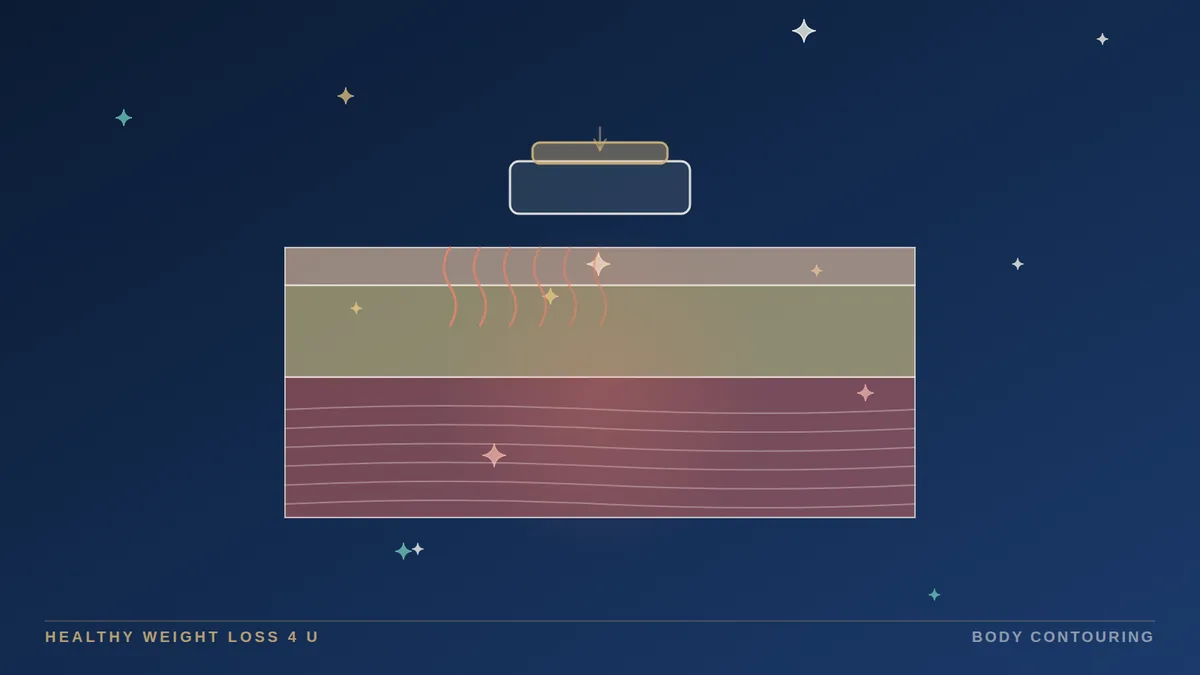
truSculpt iD is a Cutera radiofrequency (RF) system that heats tissue under the skin. Its FDA clearance wording says the 2 MHz setting of the 40 cm2 handpiece is indicated for reduction in circumference of the abdomen and non-invasive lipolysis (breakdown of fat) of the abdomen, and that its massage device is for temporary reduction in the appearance of cellulite. The clearance summaries describe no clinical data, so results depend on the manufacturer's cited study and individual response.
Key takeaways
- The fat-related clearance is limited to the abdomen and to the 2 MHz setting of the 40 cm2 handpiece [2][3].
- The RF indications also include topical heating for relief of pain and muscle spasms and increase in local circulation [2][3].
- The 2022 FDA summaries for truSculpt iD report no clinical data; the only human testing described is skin temperature measured in 3 people [2][3].
- The manufacturer cites an average 24% fat reduction from one 2021 study, which this review could not open to check [4].
- Pacemakers, internal defibrillators, pregnancy, infection in the treatment area, multiple sclerosis and bleeding disorders are listed contraindications [4].
What is truSculpt iD?
truSculpt iD is a Cutera radiofrequency system for body contouring. The FDA summary describes a console, one or more RF handpieces connected by cables, and a truGlide massage roller. The handpieces operate at 1 MHz and 2 MHz with a maximum RF power of 300 W, and they heat subcutaneous tissue while monitoring epidermal (outer skin) temperature [2]. Cutera describes the platform as a monopolar RF body sculpting system that treats the subcutaneous fat layer [4][5]. The most recent FDA summary lists the RF type as bipolar/monopolar and adds a smaller 2 cm2 applicator [3].
The Highlands Ranch clinic lists truSculpt iD among its devices. The device is separate from truSculpt flex, a muscle-stimulation device that Cutera's body sculpting page describes as combinable with its truSculpt RF treatments [5]. See the separate article on truSculpt flex.
What is truSculpt iD FDA-cleared to do?
The FDA indications have three parts, and only one relates to fat. The records say the truSculpt RF energy is intended to provide topical heating for the purpose of elevating tissue temperature for the treatment of selected medical conditions, such as relief of pain and muscle spasms and increase in local circulation. Additionally, the 2 MHz setting for the 40 cm2 handpiece is indicated for reduction in circumference of the abdomen and non-invasive lipolysis (breakdown of fat) of the abdomen. The truSculpt massage device is intended to provide a temporary reduction in the appearance of cellulite [2][3]. The records list the device as prescription use [2][3].
The wording has changed over time. The 2017 clearance (K172004, letter August 2, 2017) said the 2 MHz setting for the 40 cm2 handpiece was indicated for temporary reduction in circumference of the abdomen [1]. The 2022 records (K221407, July 13, 2022; K223110, November 3, 2022) add non-invasive lipolysis of the abdomen and drop the word temporary from the circumference statement [2][3]. K223110 added a new 2 cm2 applicator and kept the same indications; its primary predicate is K221407 [3].
Cutera's body-sculpting web page describes truSculpt applications as abdominal lipolysis, circumferential reduction of the abdomen and flanks, and deep dermal heating [5]. The FDA indication wording above names the abdomen only. If you are considering treatment of the flanks, thighs, arms or other areas, ask the provider what clearance covers that use. Clearance is not approval: it means the FDA found the device substantially equivalent to a legally marketed predicate.
| Function | Cleared wording (summarized) | Record |
|---|---|---|
| RF topical heating | Elevating tissue temperature for selected medical conditions, such as relief of pain and muscle spasms and increase in local circulation | K221407, K223110 [2][3] |
| 2 MHz setting, 40 cm2 handpiece | Reduction in circumference of the abdomen and non-invasive lipolysis (breakdown of fat) of the abdomen | K221407, K223110 [2][3] |
| Earlier wording, same handpiece | Temporary reduction in circumference of the abdomen | K172004 [1] |
| truSculpt massage device | Temporary reduction in the appearance of cellulite | K172004, K221407, K223110 [1][2][3] |
What do the handpieces and settings mean?
The fat-related indication depends on which handpiece and setting are used, so these details matter. The 2017 record described one 16 cm2 handpiece, up to six 40 cm2 puck-style handpieces that attach to belts for hands-free abdominal and flank treatment, adjustable belts and a multiplexor that directs RF output to up to six handpieces in sequence [1]. The 2022 record lists handheld treatment areas of 2 to 40 cm2 and hands-free areas of 40 to 240 cm2, with square or rectangular electrodes [3]. The cleared lipolysis and circumference wording applies to the 2 MHz setting for the 40 cm2 handpiece, not to every handpiece or setting on the console [2][3].
The predicates named in the records show the lineage of the technology. The 2017 clearance cites the earlier Cutera truSculpt RF Device (K162512) and the Syneron SlimShape System (K163415) as predicates and Cynosure SculpSure (K160470) as a reference device [1]. The 2022 K221407 record cites truSculpt RF Device K172004 as its primary predicate [2]. Because each clearance rests on a predicate, this is a record of equivalence, which the sources reviewed here do not translate into a measured effect for any individual.
How does RF heat reduce fat?
The proposed mechanism is controlled heating of the fat layer. The FDA summaries say the system generates a moderate temperature rise in subcutaneous tissue while monitoring epidermal temperature [2]. In the performance testing for the 2 cm2 applicator, skin surface temperatures were held at 40 to 45 degrees C and did not exceed 45 degrees C when measured on 3 human subjects [3]. That is a safety and engineering measurement, not an efficacy result.
How heated fat is then reduced is not described in the FDA summaries or the Cutera pages reviewed, and this article does not assert a mechanism beyond the manufacturer's description of heating the subcutaneous layer [2][4]. The FDA's consumer page lists RF among body contouring technologies that heat fat and skin tissue, with the risks and exclusions listed below [6].
What does the research show?
The clearance records contain no clinical results, and the single manufacturer-cited study could not be checked. The 2022 summaries report no clinical data, and K223110 states that non-clinical testing was sufficient to show substantial equivalence [2][3]. The 2017 summary refers to a clinical trial supporting the abdominal circumference indication but reports no study size, results, endpoints or adverse events [1].
Cutera's product page says the platform is clinically proven to provide an average of 24% fat reduction and cites Somenek MT, Ronan SJ, Pittman TA, Lasers in Surgery and Medicine 2021;53(3):337-343. The page gives no sample size, design or measurement method [4]. The paper and its abstract could not be opened through the sources available for this article, so the 24% figure is reported here only as a manufacturer claim and is not verified. Ask the provider for the study, the number of treatments it used, how fat was measured, and whether any authors have financial ties to the company.
For context on RF fat reduction in general, a 2014 study of a different RF device (a selective, non-contact system, not truSculpt) enrolled 40 healthy adults, of whom 35 completed four weekly 30-minute sessions. The average reduction in abdominal circumference was 4.93 cm, 3 people showed no significant response (the thinnest group), and the only side effect was mild to moderate redness. The study described no control group [7]. It shows what small early RF studies look like, and it does not predict truSculpt results.
No independent randomized trial or systematic review of truSculpt iD was found in the sources available for this article. That does not mean none exists. It means the strength of evidence cannot be confirmed here.
What does a truSculpt iD treatment involve?
Session count and downtime are not specified in the FDA records, and the manufacturer's page gives only a minimum. Cutera says patients can have as little as one 15-minute hands-free treatment and does not state a recommended number of sessions, downtime or a results timeline [4]. Those are manufacturer statements, and the treating clinician sets the plan.
The manufacturer lists expected transient events and possible adverse effects including bleeding, bruising, blistering, burns, crusting, discomfort and pain, infection, numbness, redness, scarring, swelling and tenderness [4]. The FDA says RF risks include pain, redness, swelling, blisters, burns, nodules, skin color changes and scars [6].
Who is a reasonable candidate, and who should not have it?
A reasonable candidate has a localized abdominal area they want to reduce, accepts modest and variable results, and has no listed contraindication. The FDA states that non-invasive body contouring does not treat obesity or improve your health and does not produce weight loss, and that many procedures give temporary improvement and may require repeat treatments [6].
Cutera lists these contraindications: infection in the target area, pregnancy, cardiac pacemakers or internal defibrillators, multiple sclerosis and bleeding disorders. It lists areas to avoid including near the eyes, ears, heart, reproductive organs and the spinal column, and the precaution that the treatment area should have a minimum of 1 cm thickness of soft tissue. It also advises caution over bone, joint replacements and organs, and notes that diabetes may impede wound healing [4]. The FDA adds that RF should not be used with active implants, metal under the skin from an implant or injury, or metal-containing tattoo ink in the treated area, and that people with an IUD should ask their clinician about added risk [6].
The small RF study above reported that its three non-responders had the thinnest fat layer, though it tested a different device [7].
- Pacemaker or internal defibrillator
- Pregnancy
- Infection in the treatment area
- Multiple sclerosis or a bleeding disorder
- Metal implant or metal-containing tattoo ink in the area
- Less than 1 cm of soft tissue thickness in the treatment area
What this means in practice
Treat truSculpt iD as a localized abdominal contouring tool with a narrow, specific clearance and limited public evidence. A clinician should be able to name the handpiece and setting used (the fat indication applies to the 2 MHz setting of the 40 cm2 handpiece), show the clearance, explain how many sessions the plan assumes and how change will be measured, and say what happens if there is no change. Contouring does not replace the metabolic work of weight management, and the best time to judge a contouring result is when weight is stable.
When to talk to a clinician
Healthy Weight Loss 4 U programs begin with a clinician evaluation. Contact the treating clinic promptly after a session for blisters, burns, severe or lasting pain, numbness that does not clear, signs of infection or changes in skin color [4][6]. Tell the clinician before treatment about pacemakers, implants, metal, tattoos in the area, pregnancy, bleeding disorders and diabetes.
Questions to ask your provider
Bring these to a consultation.
- Which handpiece and frequency will you use, and which FDA indication covers my treatment area?
- What evidence supports this use, how big was the study, and how was fat measured?
- How many sessions do you plan, and how will we decide it is working?
- Do any of the listed contraindications apply to me?
- How thick is the soft tissue in my treatment area, and does that affect the expected result?
- What should I watch for after treatment, and whom do I call?
Frequently asked questions
Is truSculpt iD FDA-approved?
What areas can truSculpt iD treat under its FDA clearance?
Does truSculpt iD help you lose weight?
How many truSculpt iD sessions do I need?
What are the side effects of truSculpt iD?
Who should not have truSculpt iD?
Sources
- 510(k) K172004: truSculpt RF Device (summary and indications for use). U.S. FDA, Center for Devices and Radiological Health, 2017. accessdata.fda.gov/cdrh_docs/pdf17/K172004.pdf
- 510(k) K221407: truSculpt iD (summary and indications for use). U.S. FDA, Center for Devices and Radiological Health, 2022. accessdata.fda.gov/cdrh_docs/pdf22/K221407.pdf
- 510(k) K223110: truSculpt iD (summary and indications for use). U.S. FDA, Center for Devices and Radiological Health, 2022. accessdata.fda.gov/cdrh_docs/pdf22/K223110.pdf
- truSculpt product page (indications, safety information, references). Cutera (manufacturer), n.d.. cutera.com/us-en/products/trusculpt/
- Body sculpting solutions. Cutera (manufacturer), n.d.. cutera.com/us-en/treatments/body-sculpting-solutions/
- Non-Invasive Body Contouring Technologies. U.S. Food and Drug Administration, 2025. fda.gov/medical-devices/aesthetic-cosmetic-devices/non-invasive-body-c
- Selective Radiofrequency Therapy as a Non-Invasive Approach for Contactless Body Contouring and Circumferential Reduction (Fajkosova et al.). Journal of Drugs in Dermatology 13(3):291-296, 2014. jddonline.com/articles/selective-radiofrequency-therapy-as-a-non-invas
Keep reading
truSculpt flex Muscle Stimulation: What It Is Cleared For
Read →Body Contouring vs Weight Loss: Who Is a Candidate?
Read →Body Composition Analysis: Why the Scale Misleads You
Read →Loose Skin After Weight Loss: What Tightening Can and Can't Do
Read →Questions about your own situation? A clinician can review your history and goals. Related: truSculpt, truFlex and EMTONE Contouring.