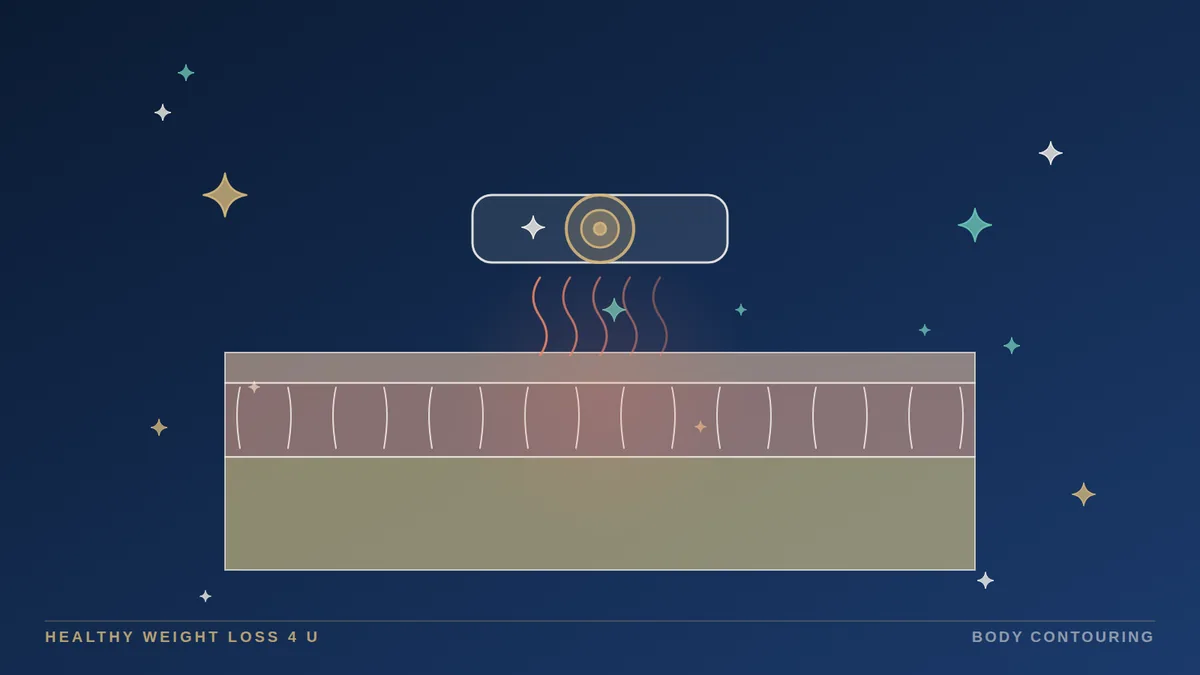
Venus Legacy combines multipolar radiofrequency, pulsed magnetic fields, massage and vacuum. FDA records clear its body applicators for temporary reduction in the appearance of cellulite, minor muscle aches and pain, muscle spasm and temporary local circulation, and its facial applicators for moderate to severe facial wrinkles in females with Fitzpatrick skin types I to IV. Skin tightening is not an FDA-cleared indication, and the evidence for cellulite devices in general is weak.
Key takeaways
- Cleared uses differ by applicator: 4D Body and 4D Face for cellulite appearance, pain, spasm and circulation; OctiPolar and DiamondPolar for facial wrinkles in females [1][2].
- Skin tightening and circumference reduction are tied to CE Mark and Health Canada licensing on the manufacturer's page, not to FDA clearance [4].
- The FDA summaries read for the device report no clinical studies, and the manufacturer's page gives no trial data [1][2][3][4].
- A 2015 evidence review of 67 human cellulite studies found no clear evidence of good efficacy in any treatment it evaluated [5].
- Cellulite results from any device should be described as temporary and variable [7].
What is Venus Legacy?
Venus Legacy is a Venus Concept console that delivers multipolar radiofrequency (RF) together with pulsed electromagnetic fields (PEMF), vacuum-assisted massage and, on some applicators, thermal feedback. The manufacturer calls the RF and magnetic combination (MP)2 and describes its VariPulse feature, and claims that the RF heats tissue and stimulates fibroblasts [4]. Those are manufacturer statements, and the page does not cite a clinical trial for them [4].
The FDA summaries give the engineering specifications. The Legacy Pro console combines the earlier Legacy BX and Legacy CX into one unit with four applicators: OctiPolar (LB1), DiamondPolar (LF1), 4D Body (LB2) and 4D Face (LF2). RF frequency is 1 MHz, maximum RF output is up to 150 W per applicator, the pulsed magnetic field is 15 Gauss at 15 Hz, and vacuum pressure is -400 mbar [2]. Legacy BX, the earlier face-focused model, lists the same 1 MHz RF and 15 Hz, 15 Gauss pulsed field [3].
The manufacturer's page lists the 4D Body applicator with a claimed penetration depth up to 4.25 cm and electrode spacing up to 7.5 cm, describes 4D Face as a smaller version for hard-to-reach areas, and says OctiPolar and DiamondPolar each have an integrated thermometer. It also states that the applicators have integrated sensors that provide real-time thermal feedback [4]. These are manufacturer specifications that the page does not support with clinical data, and the FDA summaries do not state penetration depth.
The Lighthouse Point clinic lists Venus Legacy among its devices. Because the family includes several models and applicators, ask which one the clinic uses and which applicator would treat your area.
What is Venus Legacy FDA-cleared to do?
There are two separate clearances, and they are tied to different applicators. The 4D Body (LB2) and 4D Face (LF2) applicators are cleared for delivery of non-thermal RF combined with massage and magnetic field pulses for relief of minor muscle aches and pain, relief of muscle spasm, temporary improvement of local blood circulation, and temporary reduction in the appearance of cellulite (Legacy CX, K143554, letter July 1, 2015; Legacy Pro, K191528, September 6, 2019) [1][2].
The OctiPolar (LB1) and DiamondPolar (LF1) applicators are cleared for use in dermatologic and general surgical procedures for females for the non-invasive treatment of moderate to severe facial wrinkles and rhytides in Fitzpatrick skin types I to IV (Legacy BX, K142910, December 19, 2014; Legacy Pro, K191528) [2][3].
Two details matter for expectations. First, the cleared body indication is for the appearance of cellulite, described as temporary, and not for fat loss, weight loss, or loose skin. Second, the wrinkle indication is limited to females with Fitzpatrick types I to IV and to the face. The manufacturer's page repeats the wrinkle and cellulite indications as FDA-cleared, but its claims of temporary skin tightening and circumferential reduction are attached to Health Canada and CE Mark licensing, and its marketing line that the device is safe for all skin types is broader than the FDA wrinkle indication [4]. This article does not claim skin tightening for Venus Legacy because the FDA wording does not include it.
| Applicator | Cleared use (FDA wording summarized) | Record |
|---|---|---|
| 4D Body (LB2) and 4D Face (LF2) | Non-thermal RF with massage and magnetic field pulses: relief of minor muscle aches and pain, relief of muscle spasm, temporary improvement of local blood circulation, temporary reduction in the appearance of cellulite | K143554, K191528 [1][2] |
| OctiPolar (LB1) and DiamondPolar (LF1) | Non-invasive treatment of moderate to severe facial wrinkles and rhytides in females, Fitzpatrick skin types I-IV | K142910, K191528 [3][2] |
| Not found in the FDA records reviewed | Skin tightening, circumferential reduction, fat reduction, weight loss | Manufacturer ties tightening and circumference claims to CE and Health Canada [4] |
How does multipolar RF with magnetic pulses work?
RF passes an electrical current through the skin that warms tissue, and the pulsed magnetic field and vacuum are adjuncts. The Legacy BX summary describes the RF as heating tissue to trigger cellular changes and the magnetic energy as an adjunct intended to reduce downtime [3]. The Legacy CX summary says the vacuum is mainly used for massaging deep tissues by creating mild to deep suction and that the pulsed field assists in achieving the treatment effect [1].
The records also contain a wording point worth knowing about. The cleared body indication says non-thermal RF, while the Legacy Pro summary reports bench testing in which the 4D Body applicator held a surface temperature of 41 to 45 degrees C and the 4D Face applicator 39 to 45 degrees C [2]. The summaries do not explain how these fit together. For a patient, the practical point is that treatment feels warm, and the details of the heating and its safety limits belong to the labeling that the clinic should share on request.
The wider literature does not firmly establish why RF would change skin, fat or cellulite. A 2015 systematic review of RF for skin laxity proposes that RF raises tissue temperature and stimulates collagen formation, but says the physiological mechanisms and parameters are not clear [6].
What does the evidence say about cellulite and wrinkles?
For cellulite, the evidence for devices as a group is weak, and no Venus Legacy-specific clinical trial was found in the sources reviewed for this article. The FDA records for the Legacy models report bench, electrical safety, biocompatibility and software testing and no human studies, and the Legacy Pro and BX records specifically report no clinical performance data [1][2][3]. The manufacturer's product page lists two references, a market-forecast document and a laboratory study of PEMF and wound healing, and offers no efficacy data for cellulite or wrinkles [4].
The strongest general evidence is a 2015 evidence-based review in the American Journal of Clinical Dermatology. Following PRISMA guidelines, the authors analyzed 67 human studies, of which only 19 were placebo-controlled and randomized. They reported that RF and other device studies had important methodological flaws, that only acoustic wave therapy and the 1440 nm Nd:YAG minimally invasive laser showed signs of possible benefit, and that no clear evidence of good efficacy could be identified in any of the evaluated cellulite treatments. They also note that cellulite affects roughly 80 to 90% of post-pubertal women [5]. That review is more than a decade old, and the abstract available for this review does not break out RF results, so newer trials may exist that are not described here.
For wrinkles and skin laxity, the 2015 review of RF in Anais Brasileiros de Dermatologia included 31 human studies, 61% on the face. Only 44% reported statistical significance, all scored 4 or lower on the PEDro scale, 96% had no control group, none used blinding, and few used an objective measure. The authors called RF for skin laxity still a myth to be clarified [6].
Taken together, a patient should expect that any improvement in cellulite appearance or facial wrinkles would be modest and temporary, and the available evidence cannot predict how much for a given person. The FDA's consumer page says many body contouring procedures give temporary improvement in the appearance of cellulite and that multiple treatments may be needed [7].
What is a treatment like, and how many sessions are needed?
The sources reviewed do not set a session count, session length, interval or results timeline for Venus Legacy. The manufacturer's page gives none of these and says only that treatments are comfortable with no downtime [4]. The FDA summaries do not describe a clinical protocol [1][2][3]. The treating clinician sets the plan, and you should ask what protocol the provider follows and what evidence it is based on.
The FDA lists the risks of RF energy as pain, redness, swelling, blisters, burns, nodules, skin color changes and scars [7]. The FDA also says some complications of contouring procedures may last a long time or require surgery to correct [7].
Who is a reasonable candidate, and who should not have it?
Reasonable candidates are adults who want a modest, temporary change in the appearance of cellulite (or, for the face applicators, females with Fitzpatrick I to IV skin seeking wrinkle treatment) and who understand the limited evidence. People who expect tightening of loose skin after major weight loss, fat loss, or a permanent result are not well matched to the cleared indications. The related article on loose skin explains what is and is not supported.
The FDA summaries for Legacy list no contraindications [1][2][3], so use the FDA's RF guidance and ask the clinic for the device labeling. The FDA says people with active implants such as pacemakers or implantable cardioverter defibrillators, metal under the skin from an implant or injury, or metal-containing tattoo ink in the treated area should avoid RF, and that people with an IUD should ask their clinician about added risk [7]. Not all RF devices on the market are intended for cosmetic use [7]. Pregnancy, skin infections, open wounds and similar conditions are standard screening topics for energy devices, and the clinician should review them with you, but the sources read here do not list them for Venus Legacy specifically.
- Pacemaker, implantable defibrillator or other active implant
- Metal under the skin or metal-containing tattoo ink in the area
- Possible added risk with an IUD: ask the clinician
- Face wrinkle indication: females, Fitzpatrick skin types I to IV
What this means in practice
Match the applicator and the claim. If a provider describes Venus Legacy as tightening skin or reducing fat, ask which cleared indication that falls under, since the FDA records for the device list cellulite appearance, muscle pain, spasm, circulation and facial wrinkles. A conservative way to approach treatment is to define a measurable goal, such as the same photographs taken under the same lighting, and to agree in advance when you would stop if there is no change.
When to talk to a clinician
Healthy Weight Loss 4 U programs begin with a clinician evaluation. Contact the treating clinic promptly after a session for blisters, burns, severe or lasting pain, or new skin color changes [7]. If you have a pacemaker, defibrillator or other implant, or metal in the treatment area, tell the clinician before any RF treatment [7].
Questions to ask your provider
Bring these to a consultation.
- Which Venus Legacy model and which applicator will you use for my goal?
- Which FDA-cleared indication covers this use, and where can I see the clearance?
- What is the evidence for this use, and how large were the studies?
- What protocol do you follow, and when would we decide to stop?
- What are the contraindications in the device labeling, and do any apply to me?
Frequently asked questions
Is Venus Legacy FDA-cleared for skin tightening?
Does Venus Legacy get rid of cellulite?
Can Venus Legacy reduce wrinkles?
Who should not get a Venus Legacy treatment?
How many Venus Legacy sessions are needed?
What are the side effects of RF treatments like Venus Legacy?
Sources
- 510(k) K143554: Venus Legacy CX (summary and indications for use). U.S. FDA, Center for Devices and Radiological Health, 2015. accessdata.fda.gov/cdrh_docs/pdf14/K143554.pdf
- 510(k) K191528: Venus Legacy Pro (summary and indications for use). U.S. FDA, Center for Devices and Radiological Health, 2019. accessdata.fda.gov/cdrh_docs/pdf19/K191528.pdf
- 510(k) K142910: Venus Legacy BX (summary and indications for use). U.S. FDA, Center for Devices and Radiological Health, 2014. accessdata.fda.gov/cdrh_docs/pdf14/K142910.pdf
- Venus Legacy product page. Venus Concept (manufacturer), n.d.. venus.ai/venus-legacy
- Cellulite: An Evidence-Based Review (Luebberding, Krueger, Sadick). American Journal of Clinical Dermatology 16:243-256, 2015. link.springer.com/article/10.1007/s40257-015-0129-5
- Radiofrequency for the treatment of skin laxity: mith or truth (Araujo et al.). Anais Brasileiros de Dermatologia, 2015. scielo.br/j/abd/a/H44b5rY7LC4dPBNY9cjP3hd/?lang=en
- Non-Invasive Body Contouring Technologies. U.S. Food and Drug Administration, 2025. fda.gov/medical-devices/aesthetic-cosmetic-devices/non-invasive-body-c
Keep reading
Loose Skin After Weight Loss: What Tightening Can and Can't Do
Read →Venus Bliss Max Body Sculpting: What It Does and Doesn't
Read →Body Contouring vs Weight Loss: Who Is a Candidate?
Read →How to Choose a Medical Weight Loss Clinic: 12 Questions
Read →Questions about your own situation? A clinician can review your history and goals. Related: Venus Legacy Skin Tightening.